
Pride, Misjudgment, and Repair
Gente que viene y ¡Bah!Across professional, romantic, and family conflicts, the characters learn that pride and confident assumptions can magnify harm, while repair requires humility and action.
increasing Bearing strength in each event
 decreasing
Bearing strength in each eventdecreasingBea’s Misread Proposal

Intention is not enough
A plausible suspicion
Bea believes Víctor proposed to keep her quiet about an impending layoff. His admission that he knew about the job risk appears to confirm her fear, even though his stated purpose was to protect her employment.
A real failure of communication
Víctor did have a motive connected to work, but he also says he loved Bea and expected to explain his thinking. By withholding that explanation, he denied her the chance to judge the proposal honestly.
The episode resists a simple division between innocent victim and malicious planner. Good intentions do not erase unilateral decisions, while suspicion can still distort the motives of someone who has not yet spoken.
The Accusation at the Sawmill
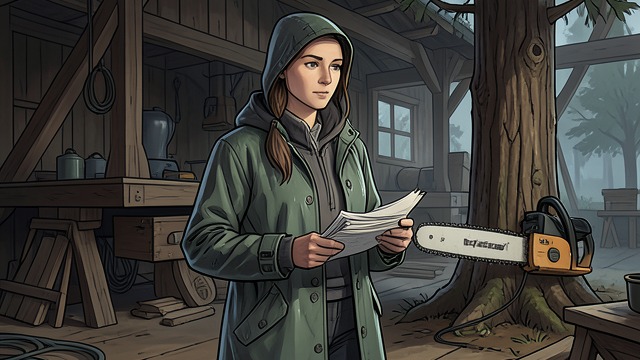
Anger outruns evidence
A retaliation theory
Bea assumes Diego ordered the tree felling to punish her for refusing his daughter’s commission. She storms into the sawmill and accuses him of destroying her project deliberately.
Documents change the story
Diego produces the sale agreement and explains that his father-in-law controls the extraction schedule. The timing is painful, but the trees were sold months earlier, before Bea began building.
Bea’s anger was grounded in a real loss, but not in a proven act of revenge. The encounter illustrates the cost of treating coincidence as certainty, especially when earlier betrayals have made trust difficult.
The Unwanted Ultimatum
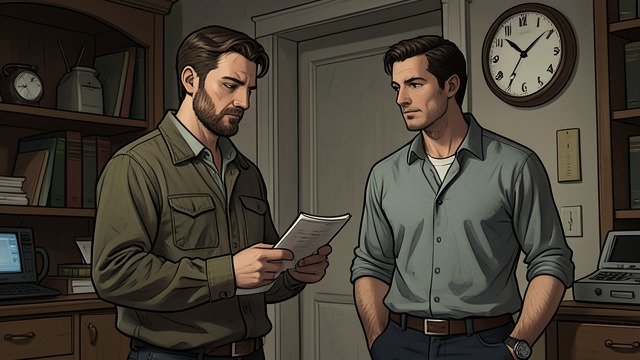
Commitment without a timetable
Jacobo’s fear
Jacobo sees living together as evidence that León takes their relationship seriously. León sees the proposal as premature and rejects the idea that cohabitation is the only credible proof of love.
Pride escalates the disagreement
Jacobo turns a request into an ultimatum, and León responds with a cutting refusal. Both men defend their own understanding of independence and commitment without making enough room for the other’s fear.
The breakup is not caused by a lack of affection. It grows from the assumption that one shared future must take a single form and begin on one person’s schedule.
Journalism and Assumption
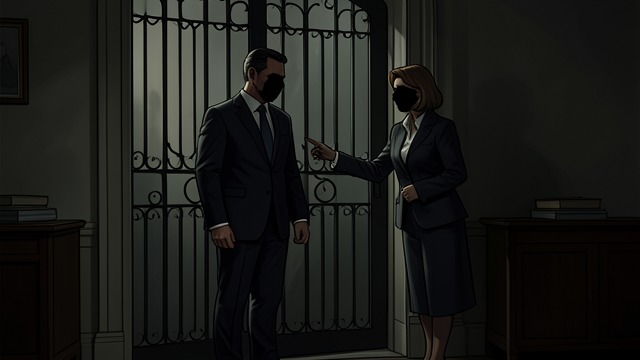
A story can be useful and false
Activism’s temptation
Pacheco sees Bea’s arrest during the logging dispute as an ideal symbol against the biomass project. He is tempted to publish before fully testing whether the trees were actually taken unlawfully.
Evidence complicates the headline
Bea and Débora show him the sale documents and ask him not to make the conflict serve a cause by distorting the facts. Débora remains opposed to the plant, but refuses to support a false account.
The episode distinguishes commitment from manipulation. A political cause may be sincerely held, yet it loses moral force when its advocates abandon the truth that should constrain them.
Bea’s Final Reckoning
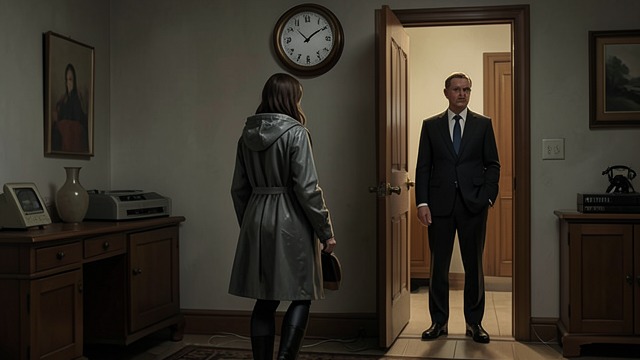
Rejection of easy blame
A painful dismissal
When Bea waits for Diego, he says he cannot spend time on what he calls “nonsense” while his business and family are in crisis. He soon apologizes, but Bea has already heard how little space he believes he can give her.
Choosing departure
Bea tells him that he has disappointed her and walks away in the rain. She recognizes that she cannot rescue him from grief or force him to choose a relationship before he is ready.
The departure is painful but clarifying. Bea does not claim that she made no mistakes; she stops treating another person’s indecision as a problem she must solve by waiting indefinitely.
During the confrontation after the engagement breaks
After the chestnut trees are felled
After Jacobo asks León to move in
Before Pacheco decides whether to publish the tree dispute
The rainy day before Bea leaves Cantabria
